
- LiFePO4 Battery Chemistry
- Continuous AC Output vs. Surge Power
- Scalable Capacity (Watt-Hours)
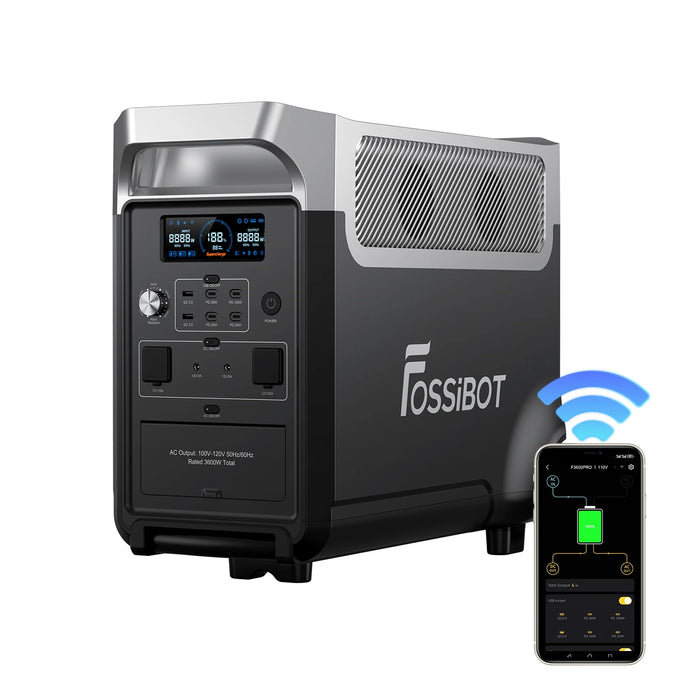
- FOSSiBOT F3600 Pro
- FOSSiBOT F7200
Introduction
When severe storms strike or the U.S. power grid falters under pressure, a sudden home blackout triggers immediate anxiety. Food in the refrigerator begins to spoil, climate control shuts down, and critical home office or medical equipment goes dark. Relying on passive hope is no longer a safety strategy—true security lies in personal energy independence.
While noisy, high-maintenance gas generators were once the default fix, today’s homeowners are rapidly transitioning to clean, silent, and highly efficient indoor power ecosystems. To help you protect what matters most, we have reviewed the core technology and specific features that define the best solar generator for home backup in 2026, ensuring your household remains safe, comfortable, and fully powered through any unexpected outage.

Why Traditional Generators Are Fading (And Why Solar Wins)
Traditional gas generators create logistical problems during a crisis. Gas stations may lose power or run out of fuel, and stored fuel expires within months. Even worse, CO poisoning risks force you to run them outdoors at least 20 feet from your home – directly in the storm that caused the outage. They also exceed 70 dB of noise, disturbing your family and neighbors, and require constant maintenance: oil changes, spark plug replacements, and carburetor cleanouts.
In sharp contrast, a modern solar generator runs safely indoors with zero toxic fumes and noise below 30 dB (quieter than a library). It works on plug-and-play simplicity, capturing solar energy during the day and powering your home at night – completely independent from volatile fuel markets.
What Makes the Best Solar Generator for Home Backup? (Key Metrics)
Not all portable power stations are built for long-duration blackouts. Focus on these three critical specs.
1. LiFePO4 Battery Chemistry
The core of any premium home backup unit is its battery. Older NMC or lead-acid batteries degrade quickly. Today’s standard is Lithium Iron Phosphate (LiFePO4). It offers superior thermal stability (no thermal runaway risk) and delivers over 4,000 charge-discharge cycles before falling to 80% capacity – that’s more than a decade of emergency readiness, offering an unmatched return on investment.
2. Continuous AC Output vs. Surge Power
Appliances with compressors (refrigerator, sump pump, air conditioner, well pump) require a short, massive electrical spike to start – called surge power. The best solar generator for home backup must provide high continuous wattage plus a strong surge buffer to avoid tripping internal breakers. A 3,600W unit with 7,200W surge, for example, can easily start a full-size fridge while running other essentials.
3. Scalable Capacity (Watt-Hours)
Battery capacity is measured in Wh (watt-hours). A typical American home consumes a significant amount of energy daily, so a backup system must balance portability with large capacity. The best solution is modular expansion – starting with a base unit and adding external battery packs as needed. This allows you to scale up for multi-day outages or extreme weather events.
FOSSiBOT Top Picks: The Ultimate Home Backup Ecosystem
|
Model |
Continuous AC Output |
Base Capacity |
Max Expanded Capacity |
Battery Chemistry |
|
FOSSiBOT F3600 Pro |
3,600W (7,200W surge) |
3,840Wh |
11,520Wh (11.5kWh) |
LiFePO4 |
|
FOSSiBOT F7200 |
7,200W (14,400W surge) |
5,222Wh |
15,667Wh (15.7kWh) |
LiFePO4 |
The High-Capacity Champion: FOSSiBOT F3600 Pro (3,600W / 3,840Wh)
The F3600 Pro hits the sweet spot of high performance and residential versatility. Its 3,600W pure sine wave inverter and 3,840Wh base capacity handle standard household loads with ease. For families needing extended runtime, it supports up to two expansion batteries, reaching a total of 11,520Wh.
Here’s what the F3600 Pro can actually run during a blackout (on a single charge):
|
Appliance |
Typical Wattage |
Estimated Runtime |
|
Refrigerator (200W) |
200W |
~16 hours |
|
WiFi router + laptop |
50W |
~70 hours |
|
55” LED TV |
100W |
~35 hours |
|
CPAP machine (no humidifier) |
30W |
~115 hours |
Crucially, the F3600 Pro features an integrated Uninterruptible Power Supply (UPS) with a sub-10ms transfer time (faster than a blink). If the grid drops unexpectedly, sensitive electronics like desktop computers and home security systems experience zero interruption – preventing data loss and system reboots. That’s why many homeowners consider the F3600 Pro the best solar generator for home backup – it perfectly balances capacity, expandability, and silent operation.
The Whole-House Heavy-Duty Standard: FOSSiBOT F7200 (7,200W / 5,222Wh)
For large properties, multi-generational families, or regions prone to extended severe weather, the F7200 sets a new benchmark in emergency resilience. Delivering 7,200W continuous (14,400W surge) and 240V split-phase capability, it powers heavy appliances like central air conditioning, well pumps, electric water heaters, and high-draw kitchen ranges. Its 5,222Wh base capacity scales up to 15,667Wh, providing true whole-house backup.
The F7200 bridges the gap between small portable power stations and permanently installed home generators – without the high installation costs of fixed wall-mounted units.

Crucial Maintenance Tips for Your Home Solar Generator
To ensure your solar generator performs flawlessly during an emergency, follow these two best practices.
Periodic Full Cycle – Keep the Battery Healthy and Accurate
If you leave your FOSSiBOT power station sitting for months without use, the battery management system (BMS) can slowly lose track of the true remaining capacity. To ensure your generator shows an accurate state of charge during an actual emergency – and to keep the LiFePO4 cells in optimal condition – we recommend performing a full charge cycle every 6 to 12 months. Simply plug the unit into wall AC until it reaches 100%, then run a moderate load (like a lamp or fan) until the battery is fully drained, and recharge it again. This simple practice keeps your backup ready and reliable for years.
Weather Resistance vs. Waterproofing – Keep the Main Unit Dry
Our high-efficiency solar panels are rated IP67, meaning they can withstand rain or snow during outdoor use. However, the core power station contains sensitive inverters, cooling fans, and lithium battery circuitry that must never be exposed to direct water ingress.
During storms, always operate the main generator indoors, on a covered porch, or inside a well-ventilated protective enclosure. Keep air intake and exhaust vents clear to prevent overheating. These simple steps protect your equipment and ensure reliable performance when you need it most.
FAQs About Home Backup Solar Generators
1. Can a solar generator power an entire house during a blackout?
A: Yes, if you manage your loads effectively. A 7,200W system like the FOSSiBOT F7200 can easily run your refrigerator, lights, internet router, water pump, and even central AC simultaneously – without noisy gas engines or extension cord hazards.
2. How long will a 3,000Wh+ solar generator run a standard refrigerator?
A: A modern energy-efficient fridge draws between 100W and 200W while running. With a 3,840Wh system like the F3600 Pro, accounting for conversion efficiency, you can expect 24 to 30+ hours of runtime on a single charge – keeping your food fresh through multi-day outages.
3. How long does it take to fully recharge a solar generator during an outage?
A: Recharge time depends on your input source. FOSSiBOT systems feature ultra-fast AC+ solar charging – the F3600 Pro can reach a full charge in under 2 hours. With solar alone (e.g., FOSSiBOT SP420 panels), expect 4 to 6 hours of peak sunlight to fully replenish the battery.
4. Is it safe to leave a solar generator plugged in all the time?
A: Yes, it is completely safe. FOSSiBOT units are equipped with advanced Battery Management Systems (BMS) that constantly monitor voltage, temperature, and current. Once the LiFePO4 cells reach 100%, the BMS automatically stops charging to prevent overcharging. Keeping your unit plugged in also keeps UPS mode active, providing instant backup the moment the grid fails.
Conclusion
Electrical blackouts are no longer just minor inconveniences – they threaten household safety and modern comfort. Relying on an aging utility grid leaves your family vulnerable. Choosing a modern solar generator is more than an upgrade from noisy, high-maintenance gas equipment; it’s a long-term investment in energy independence and true peace of mind. When you search for the best solar generator for home backup, prioritize LiFePO4 chemistry, expandable capacity, and real-world surge handling. With a FOSSiBOT power station, your home remains safe, powered, and connected – no matter what the grid does.
Ready to secure your home before the next storm hits?
Explore the FOSSiBOT Home Backup Solar Collection today. Enjoy a 5-Year Warranty, fast free shipping from US warehouses, and local customer support. Don’t wait for the lights to go out – power your peace of mind now.


