
Table of Contents
- Introduction
- How Long Will a 1,024Wh Power Station Last?
- How Long Can a 1,024Wh Power Station Run Common Devices?
- What Can a 1,024Wh Power Station Run?
- What Affects the Runtime of a 1,024Wh Power Station?
- How to Make a 1,024Wh Power Station Last Longer
- Is a 1,024Wh Power Station Enough?
- 1,024Wh vs. 2,048Wh: Which Should You Choose?
- Frequently Asked Questions
- Final Thoughts
Introduction
A 1,024Wh portable power station can provide hours of backup power for everyday electronics, camping gear, and essential home appliances. But exactly how long will it last?
The answer depends on one key factor: how much power your devices use.
A 1,024Wh power station stores just over 1kWh of energy, making it a practical capacity for home backup, camping, RV trips, and other portable power needs. It can keep low‑power devices running for many hours, while high‑wattage appliances can drain the battery much faster.
In this guide, we'll show you how to estimate the runtime of a 1,024Wh portable power station and what you can realistically expect when powering common devices.

How Long Will a 1,024Wh Power Station Last?
The simplest way to estimate runtime is to divide the usable battery capacity by the power consumption of your device.
A basic formula is:
Runtime ≈ Battery Capacity (Wh) × Usable Efficiency ÷ Device Power (W)
Although a battery is rated at 1,024Wh, you won't be able to deliver all 1,024Wh to an AC appliance because some energy is lost during power conversion. For a practical estimate, using around 85% usable energy is a reasonable starting point, although actual results vary by power station, device, and operating conditions.
For example:
A 100W device
1,024Wh × 85% ÷ 100W ≈ 8.7 hours
A device that continuously draws 100W could therefore run for roughly 8–9 hours.
A 500W device
1,024Wh × 85% ÷ 500W ≈ 1.7 hours
That's approximately 1 hour and 45 minutes.
A 1,000W device
1,024Wh × 85% ÷ 1,000W ≈ 0.87 hours
That's around 52 minutes.
These examples illustrate why the same 1,024Wh battery can last all day with low‑power electronics but less than an hour with a high‑power appliance.

How Long Can a 1,024Wh Power Station Run Common Devices?
Here's a general idea of what you can expect from a 1,024Wh power station.
|
Device |
Typical Power Draw |
Estimated Runtime* |
|
Smartphone |
5–10W |
87–174 hours |
|
Wi‑Fi Router |
10–20W |
44–87 hours |
|
LED Light |
10–20W |
44–87 hours |
|
Laptop |
50–70W |
12–17 hours |
|
Fan |
30–60W |
15–29 hours |
|
TV |
80–150W |
6–11 hours |
|
Portable Fridge |
40–80W |
11–22 hours |
|
Refrigerator |
100–200W |
4–9 hours |
|
Coffee Maker |
800–1,200W |
44–65 minutes |
|
Microwave |
1,000–1,500W |
35–52 minutes |
*Estimates are based on approximately 85% usable energy and continuous power consumption. Actual runtime varies depending on the device, power station, and operating conditions.
Keep in mind that the figures above are estimates rather than guaranteed runtimes. Appliances such as refrigerators cycle on and off instead of drawing their rated power continuously, so their actual runtime can differ significantly from a simple calculation.
What Can a 1,024Wh Power Station Run?
A 1,024Wh portable power station can be useful in several everyday situations.
Home Backup
During a short power outage, you don't necessarily need to power your entire house. A better approach is to prioritize essential devices.
A 1,024Wh power station can help keep devices such as:
- Wi‑Fi routers and modems
- Smartphones
- Laptops
- LED lights
- TVs
- Fans
- Small refrigerators or coolers
running when the grid goes down.
For example, you could keep your Wi‑Fi router, a few lights, phones, and a laptop running overnight without using nearly as much energy as you would by powering a large household appliance.
If you need to run multiple high‑power appliances or prepare for a multi‑day outage, however, a larger battery capacity may be a better choice.
Camping
For weekend camping and car camping, 1,024Wh offers a useful balance between capacity and portability.
You can use it to charge:
- Phones and cameras
- Camping lights
- Laptops
- Portable refrigerators
- Electric coolers
- Fans
- Small appliances
Instead of relying on a vehicle or campground electrical hookup, you can bring your own stored electricity and recharge it later with AC power or compatible solar panels.
RV Trips
A 1,024Wh power station can also handle many of the electronics used during RV trips and boondocking.
It can power or charge devices such as lights, phones, laptops, TVs, and portable refrigerators. However, high‑energy appliances such as RV air conditioners, electric heaters, and large cooking appliances can consume hundreds or even thousands of watts.
That's why RV users should consider both battery capacity and output power. A large battery won't help if the inverter can't support the appliance, while a powerful inverter doesn't necessarily mean the battery will last a long time.
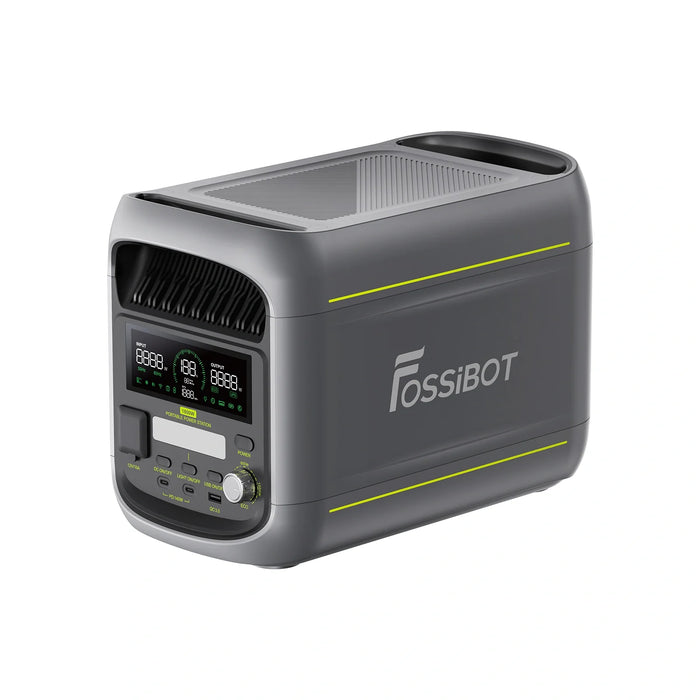
For example, the FOSSiBOT F1800 combines a 1,024Wh battery with 1,800W of continuous output and 3,600W of peak power, making it a useful example of how battery capacity and inverter output serve different purposes.

What Affects the Runtime of a 1,024Wh Power Station?
Your actual runtime may be shorter or longer than a basic calculation suggests. Several factors can make a difference.
1. Power Consumption
The most important factor is how much electricity your device actually uses.
A 50W laptop consumes far less energy than a 1,000W coffee maker. If you're trying to maximize runtime, lower‑power devices will always give you more hours from the same battery.
2. Inverter Efficiency
When you use an AC outlet, the power station converts battery‑stored DC electricity into AC power. This conversion isn't 100% efficient, which is why the full 1,024Wh capacity isn't available to your AC devices.
3. Standby Consumption
Some devices continue to use electricity even when they're not actively operating. Unplugging unnecessary equipment can help reduce wasted energy.
4. Multiple Devices
If you're running several devices at the same time, add their power consumption together.
For example, a 100W TV and a 50W fan create a combined load of approximately 150W. You should use 150W—not 100W or 50W—when estimating runtime.
5. Appliance Cycling
Some appliances don't continuously operate at their rated wattage.
A refrigerator, for example, only runs its compressor when needed. Its average energy consumption can therefore be much lower than its maximum or running wattage suggests.
How to Make a 1,024Wh Power Station Last Longer
If you want to get more runtime from your battery, a few simple habits can make a noticeable difference.
Prioritize essential devices. During a power outage, turn off equipment you don't need.
Use energy‑efficient appliances. Lower power consumption means longer runtime.
Avoid unnecessary standby loads. Disconnect devices that don't need to remain powered.
Use ECO mode when available. Some power stations can automatically reduce unnecessary power consumption when connected devices are idle.
Recharge with solar power. For camping, RV trips, or extended outages, solar panels can replenish the battery during the day. This can effectively extend your available power beyond the energy initially stored in the battery.
Is a 1,024Wh Power Station Enough?
For many users, 1,024Wh is a practical middle ground between a small power bank and a much larger home backup system.
It's a good fit if you mainly need to:
- Charge phones, tablets, and laptops
- Keep lights and networking equipment running
- Power small appliances
- Support weekend camping trips
- Provide basic backup during short outages
- Run portable refrigerators or coolers
You may want a larger power station if you need to:
- Run a refrigerator for an extended outage
- Power several appliances at once
- Stay off‑grid for multiple days
- Run air conditioning or electric heating
- Support high‑wattage appliances for long periods
In these situations, moving to a 2,000Wh‑class power station can provide roughly twice the stored energy and significantly longer runtime.
1,024Wh vs. 2,048Wh: Which Should You Choose?
The right capacity depends on how much power you need and how long you need it.
|
Use Case |
1,024Wh |
2,048Wh |
|
Weekend camping |
✓ |
✓ |
|
Phones and laptops |
✓ |
✓ |
|
Basic emergency backup |
✓ |
✓ |
|
Refrigerator backup |
Shorter runtime |
Longer runtime |
|
Multiple appliances |
Limited |
Better suited |
|
Multi‑day backup |
Limited |
Better suited |
|
Extended off‑grid use |
Limited |
Better suited |
If portability and everyday backup power are your priorities, a 1,024Wh power station can provide a strong balance of capacity and convenience.
If your priority is longer runtime, more simultaneous devices, or extended off‑grid power, a 2,048Wh model may be worth the additional size and weight.
Frequently Asked Questions
1. How long will a 1,024Wh power station last?
It depends on the power consumption of your devices. As a general example, a 100W device could run for around 8–9 hours using approximately 85% of the battery's rated capacity, while a 1,000W appliance could run for less than an hour.
2. Can a 1,024Wh power station run a refrigerator?
Yes, as long as the refrigerator's power requirements are within the power station's output limits. Actual runtime depends on the refrigerator's energy consumption and how often its compressor cycles.
3. Can a 1,024Wh power station run a 1,000W appliance?
It can, provided the power station's continuous output is high enough and the appliance's startup requirements are supported. However, a 1,000W appliance will consume a 1,024Wh battery relatively quickly.
4. Is 1,024Wh enough for camping?
For many weekend camping trips, yes. A 1,024Wh power station can provide plenty of energy for phones, lights, laptops, portable coolers, fans, and other everyday camping electronics.
5. How can I calculate power station runtime?
Use this basic formula:
Runtime ≈ Battery Capacity (Wh) × Usable Efficiency ÷ Device Power (W)
For a more accurate estimate, check the actual power consumption of your device rather than relying only on its maximum rated wattage.
Final Thoughts
A 1,024Wh portable power station can provide a surprisingly useful amount of energy. For low‑power electronics such as phones, lights, Wi‑Fi routers, and laptops, it can deliver many hours of runtime. High‑power appliances, on the other hand, will consume that stored energy much faster.
The key is to look at both battery capacity and device power consumption. Once you know how many watts your devices use, you can estimate how long a 1,024Wh power station will last and decide whether it's the right capacity for your needs.
For camping, RV trips, everyday portable power, and basic emergency backup, a 1,024Wh power station can be a versatile option. If you need longer runtime or want to power more demanding appliances, stepping up to a larger‑capacity model may make more sense.


