
Introduction
For people who rely on a CPAP machine every night, a power outage is more than just an inconvenience. While most households can tolerate losing lights or WiFi, CPAP users face a real concern: how to keep their sleep therapy running when the power goes out. With hurricanes, winter storms, and grid failures becoming more common across the U.S., having a reliable CPAP battery backup provides peace of mind and ensures your therapy continues when you need it most.
However, choosing the right backup power solution is not as simple as picking the largest battery available. Factors like battery capacity, inverter quality, runtime, recharge options, and CPAP compatibility all matter. In this guide, we'll cover what to look for in a backup power solution, how many hours a portable power station can actually run your CPAP, and why a high-capacity model is a practical choice for both emergency backup and everyday preparedness.

Why CPAP Users Need Backup Power During a Power Outage
Power Outages Can Interrupt Your Nightly CPAP Routine
A power outage can happen unexpectedly. Severe weather events such as hurricanes, thunderstorms, winter storms, and heat waves can put pressure on local power grids and leave homes without electricity for hours or even days.
For many households, a blackout simply means waiting for the power to return. But for CPAP users, losing electricity during the night creates an additional concern: keeping essential sleep equipment running.
A reliable CPAP power outage solution allows users to prepare ahead of time instead of reacting after the power goes out.
Whether the outage lasts for a few hours or continues for several days, having backup power available means you can continue using your CPAP machine while also keeping other important devices charged.
CPAP Machines Need Stable and Reliable Electricity
CPAP machines are designed to operate continuously throughout the night, typically for several hours while the user sleeps. The actual power consumption varies depending on:
- CPAP model
- Pressure settings
- Whether a heated humidifier is enabled
- Heated tubing usage
- Operating environment
Some users may only need enough backup power for one overnight session, while others living in areas affected by frequent storms may want enough capacity to handle longer outages.
This is why choosing the right backup power system requires understanding your personal energy needs rather than simply buying the smallest battery available.
What Should You Look for in a CPAP Battery Backup?
A good CPAP battery backup should provide more than just stored energy. It should deliver reliable output, sufficient runtime, and convenient charging options when normal electricity is unavailable.
Here are the key factors to consider.
Battery Capacity: How Much Power Does Your CPAP Need?
Battery capacity is one of the most important factors when selecting backup power.
Many portable power stations measure capacity in watt-hours (Wh). Watt-hours indicate how much energy the battery can store and help estimate how long it can power connected devices.
A simple calculation is:
Runtime ≈ Battery Capacity (Wh) × Inverter Efficiency ÷ Device Power Consumption (W)
For example, if a CPAP machine uses around 40 watts of power, a 1,000Wh battery theoretically has enough stored energy for multiple hours of operation. However, real-world runtime can vary depending on efficiency losses and additional features such as humidifiers.
To help you visualize the real-world differences, here is a quick reference table based on typical CPAP setups:
|
CPAP Setup Scenario |
Average Power Draw |
FOSSiBOT F1800 (~1000Wh) |
FOSSiBOT F2400 (~2000Wh) |
|
Basic Mode (No Humidifier) |
~30W |
~30 hours |
~60 hours |
|
With Heated Humidifier |
~60W |
~15 hours |
~30 hours |
(Note: Actual runtime may vary slightly depending on pressure settings and tubing usage.)
A larger battery capacity provides:
- Longer CPAP runtime
- More backup time during extended outages
- Ability to power additional essential devices
For users who want backup power beyond a single night, a higher-capacity portable power station can offer more flexibility.
Pure Sine Wave Output and UPS Switching for Better Device Safety
When choosing a backup power source for sensitive electronics, inverter quality is another important consideration.
A portable power station converts stored DC battery energy into AC electricity through an inverter. Models with a pure sine wave inverter provide cleaner and more stable power that closely matches electricity from a standard wall outlet.
For CPAP users, pure sine wave output can be an important feature because it helps provide a stable power source for electronic medical devices. More importantly, if your portable power station supports UPS (Uninterruptible Power Supply) mode, it can switch to battery power in milliseconds during a grid flicker. This instant transition ensures your CPAP machine doesn't reboot or interrupt your sleep mid-cycle—a critical feature for those who experience frequent, brief brownouts.
When comparing different backup options, look beyond battery size and check the inverter specifications as well.
Quiet Operation Matters During Sleep
Noise is another major factor for CPAP users.
Traditional gas generators can provide large amounts of power, but they are often:
- Loud during operation
- Dependent on fuel
- Designed for outdoor use
- Less convenient for overnight situations
A portable power station works differently. Since it uses battery storage instead of combustion, it operates quietly without engine noise or fuel consumption.
For nighttime use, quiet operation is a significant advantage because the backup power source should not disturb sleep. This makes modern portable power stations much safer and more convenient for indoor bedroom placement compared to fuel-based alternatives.

Multiple Charging Options for Extended Outages
A short blackout may only require one full battery charge. However, longer outages caused by storms or natural disasters may require additional charging options.
A flexible CPAP backup power solution should support multiple ways to recharge, such as:
- AC Wall Charging – The fastest option before a storm arrives. Many users charge their backup power station in advance so it is ready when needed.
- Solar Charging – Solar panels can help recharge a portable power station during extended outages when grid electricity is unavailable.
- Car Charging – Vehicle charging provides another option when access to a wall outlet is limited.
Having multiple charging methods makes a backup system more practical for emergency situations.
How Long Can a Portable Power Station Run a CPAP Machine?
One of the most common questions from CPAP users is:
"How long will a portable power station keep my CPAP running during a power outage?"
The answer depends on several factors, including the battery capacity, CPAP power consumption, and whether additional features such as heated humidifiers are being used.
Factors That Affect CPAP Battery Runtime
CPAP Machine Model and Power Consumption
Different CPAP machines consume different amounts of electricity. Some models are designed with lower energy consumption, while others require more power depending on their features.
Before choosing a backup power solution, check your CPAP manufacturer's specifications to understand its typical wattage requirements. Knowing your device's exact wattage is the first step to calculating how many hours of use you'll actually get.
Knowing your CPAP's power consumption helps you estimate how much battery capacity you need.
Heated Humidifiers Can Increase Energy Usage
Many CPAP users rely on heated humidifiers and heated tubing for improved comfort. However, these features can significantly increase electricity consumption compared with using the CPAP machine alone.
For longer backup runtime, some users may choose to:
- Disable the heated humidifier during emergencies
- Reduce optional heating features
- Prioritize essential CPAP operation
This can help extend battery life when electricity availability is limited.
Larger Battery Capacity Provides Longer Backup Time
A higher-capacity portable power station gives users more flexibility during extended outages.
For example:
- A compact battery may be suitable for short overnight backup
- A 1,000Wh-class power station can provide more extended runtime
- A 2,000Wh-class power station can support longer outages while powering additional devices
The right choice depends on your location, outage frequency, and personal backup needs.
Portable Power Station vs Dedicated CPAP Battery: Which Backup Option Is Better?
When searching for a CPAP battery backup, users typically find two main options: dedicated CPAP batteries and portable power stations.
Both can provide backup electricity, but they are designed for different situations.
Dedicated CPAP Battery Packs
Dedicated CPAP batteries are designed specifically for sleep therapy devices.
Advantages:
- Lightweight and easy to carry
- Designed around CPAP compatibility
- Convenient for travel
Limitations:
- Usually have smaller capacities
- Often power only one device
- May provide limited backup time during longer outages
For travelers or occasional short-term use, a dedicated CPAP battery can be a convenient option.
Portable Power Stations
Portable power stations are larger battery systems designed to provide backup electricity for multiple devices.
Compared with a dedicated CPAP battery, a portable power station can support a wider range of emergency needs.
During a blackout, it can potentially power:
- CPAP machine
- Smartphone chargers
- WiFi router
- LED lights
- Laptop computers
- Small household electronics
This makes portable power stations a practical choice for homeowners who want one backup system that can support multiple essential devices.

Best Portable Power Stations for CPAP Backup During Power Outages
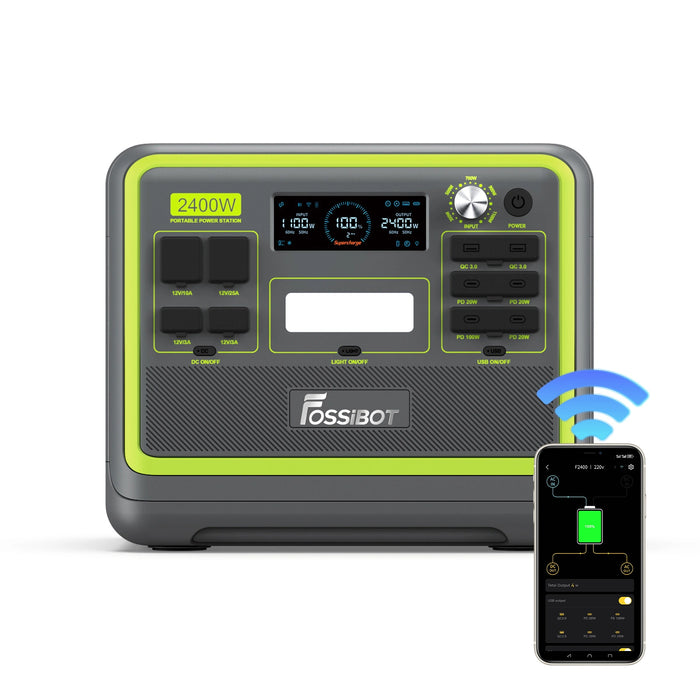
For CPAP users, the ideal backup power solution depends on how much runtime and flexibility you need. FOSSiBOT offers portable power stations designed for emergency backup, outdoor use, and off-grid situations. Here is a quick comparison of two popular models:
|
Comparison Items |
||
|
Battery Capacity |
~1000Wh |
~2000Wh |
|
CPAP Runtime (No Humidifier) |
~30 hours |
~60 hours |
|
CPAP Runtime (With Humidifier) |
~15 hours |
~30 hours |
|
Pure Sine Wave Inverter |
Yes |
Yes |
|
UPS Mode (Instant Switching) |
Yes |
Yes |
|
Recharge Options |
AC / Solar / Car |
AC / Solar / Car |
|
Noise Level |
Quiet (fan-cooled) |
Quiet (fan-cooled) |
|
Indoor Safe |
Yes (zero emissions) |
Yes (zero emissions) |
|
Best For |
Overnight backup & occasional outages |
Extended outages & multi-day emergencies |
|
Key Advantage |
Balanced portability and capacity for CPAP + small devices |
Larger reserve for CPAP + multiple household essentials |
Choose the F1800 if you experience short, occasional outages and want a portable solution that covers your CPAP overnight while keeping phones and routers running.
Choose the F2400 if you live in storm-prone areas and need multi-day backup power for your CPAP therapy along with other essential home devices.
How to Prepare Your CPAP Backup Power Before an Emergency
Having backup equipment is only useful if it is ready when you need it.
Follow these simple steps to prepare your CPAP power outage plan.
Test Your Setup Before a Power Outage
Do not wait until an emergency happens to connect your CPAP to a backup power source.
Before a storm or planned outage:
- Connect your CPAP to the backup power station
- Confirm that it operates normally
- Check estimated runtime
- Understand how different settings affect battery usage
A quick test can help avoid unexpected problems later.
Keep Your Backup Battery Fully Charged
Portable power stations should be charged and stored properly so they are ready when needed.
Good preparation habits include:
- Recharge the battery after use
- Check the battery level periodically
- Store charging cables together
- Keep the unit in an easy-to-access location
Emergency equipment works best when it is already prepared.
Consider Adding Solar Charging for Longer Emergencies
For extended outages, solar charging can provide additional energy independence.
A portable power station paired with compatible solar panels can continue collecting energy during daylight hours, helping extend backup capability when the grid remains unavailable.
This is especially useful during:
- Hurricane recovery
- Remote locations
- Camping trips
- Long-term power interruptions
Conclusion
A power outage can create extra challenges for CPAP users, but the right preparation can make unexpected blackouts much easier to manage.
When choosing a CPAP battery backup, focus on the factors that matter most:
- Battery capacity
- Pure sine wave output
- Quiet operation
- Charging flexibility
- Long-term reliability
While dedicated CPAP batteries can work well for short trips or limited backup needs, portable power stations provide a more flexible solution by powering both CPAP equipment and other essential devices during emergencies.
For users looking for dependable backup power, options like the FOSSiBOT F1800 and FOSSiBOT F2400 offer different capacity levels to match different outage scenarios.
If you are still unsure which capacity fits your nightly routine, review the runtime table above to estimate your needs. If you are ready to build your emergency plan, explore the F1800 and F2400 options to ensure you never miss a night of therapy.
With a reliable backup plan in place, CPAP users can face storms, blackouts, and unexpected power interruptions with greater confidence.
FAQ
1.Can a portable power station run a CPAP machine during a power outage?
Yes. A properly sized portable power station can provide backup electricity for many CPAP machines during a power outage. The required battery capacity depends on your CPAP model, power consumption, and desired runtime.
2.How many watts does a CPAP machine use?
CPAP power consumption varies by model and settings. Usage can increase when features such as heated humidifiers or heated tubing are enabled. Always check your specific CPAP device specifications for accurate power requirements.
3.What size battery backup do I need for a CPAP machine?
The ideal battery size depends on how long you need backup power.
- Short overnight backup: smaller capacity batteries may be enough
- Multiple-night backup: larger capacity portable power stations provide more flexibility
- Emergency home backup: higher-capacity models can support CPAP plus other essential devices
4.Can I use a portable power station indoors for CPAP backup?
Yes. Unlike fuel-powered generators, portable power stations produce no exhaust emissions during operation and are designed for convenient indoor use when operated according to manufacturer instructions.
5.Can solar panels recharge a CPAP battery backup during a power outage?
Yes. Many portable power stations support solar charging, allowing users to recharge their battery system during extended outages when traditional electricity is unavailable.
6.Should I turn off the CPAP humidifier when using battery backup power?
Many CPAP users reduce or disable heating features during emergencies to extend battery runtime. However, settings should be adjusted according to your personal comfort and equipment requirements.


